

‘Leo’ Liao - a resident of both Hong Kong and Shanghai, and alumnus of Cornell University, NY - contacted PeruNorth in Dec 2025 interested in the Rio Amazonas Research Station.
He spent three nights on board in early 2026, and has now written a blog about this and his experiences in Iquitos - including his encounters with the Chinese legacy in Peru - which he has kindly allowed us to translate and share, along with some of the photos he took:
Iquitos: The Rubber Boom, Chinese Laborers & the Shifting Tides of History
I first learned about Iquitos on Xiaohongshu [a Chinese social network often compared to Instagram] — the legendary city reachable only by water or air.
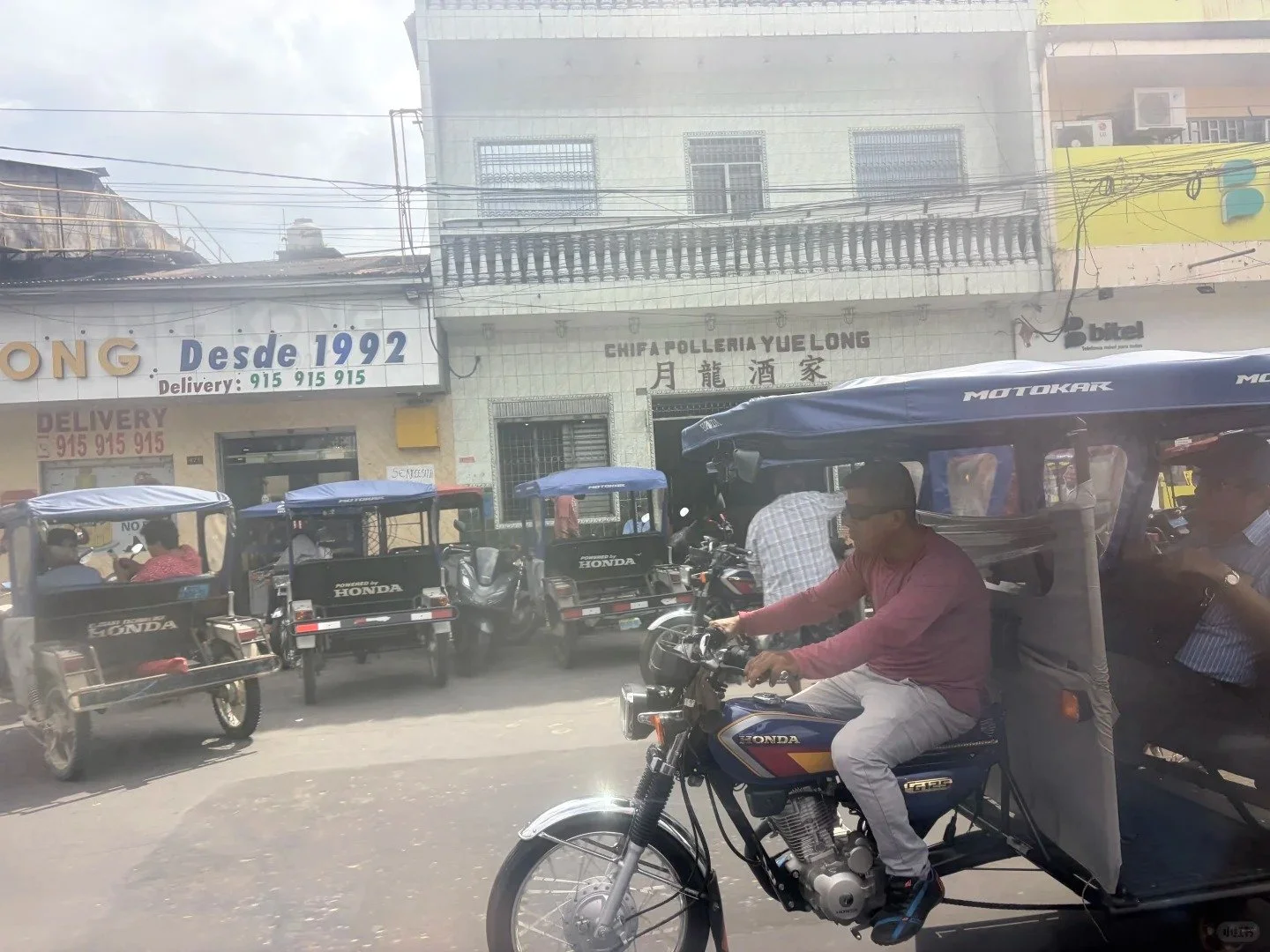
Chifa restaurant ‘Yue Long’ in Iquitos.
Like many, I came here seeking the heart of the Amazon rainforest. But upon landing, the sight of "Chifa" (local Chinese food) and "Chinos" (Chinese-run shops) everywhere sparked a deeper curiosity.
Through local museums and research, I finally began to piece together this hidden history:
The Rise: From Mission to "Amazonian Paris"

A taste of Iquitos’ golden age at the Historic Boat Museum.
Before the 1870s, Iquitos was merely a quiet missionary settlement along the river. The "Rubber Boom" changed everything.
Rubber barons and local elites descended upon the jungle to extract "black gold," turning Iquitos into Northern Peru’s most vital deep-water port.
For decades, capital flooded in, making this city wealthier than the capital, Lima.
The Resilience: The Chinese Coolie Legacy
During the mid-19th century, thousands of Chinese labourers were brought to South America as "coolies". Many who escaped the brutal conditions of guano pits and sugar plantations on the coast migrated north, eventually reaching Iquitos.
In this bustling commercial hub, they found a second chance at life. They opened grocery stores and restaurants, supplying the rubber workers and weaving Chinese customs, flavours, and surnames into the fabric of the Amazon.
The Fall: A Smuggled Seed

Info about Sir Henry Wickham at Iquitos’ Historic Boat Museum.
The boom collapsed as quickly as it began in the early 20th century.
It all started when the British smuggled rubber seeds out of the Amazon, successfully cultivating them in Southeast Asia. The local monopoly vanished overnight, transportation disadvantages took their toll, and capital fled the region.
Iquitos retreated from its golden age, becoming the rainforest outpost and tourist gateway it is today.
The Reflection: Life as a Kondratiev Wave
The echoes of past prosperity are still visible in the city's ornate, decaying architecture. Interestingly, local sentiment carries a lingering gratitude for the Spanish/European cultural legacy, yet a sharp historical resentment toward the British for ending the boom.
Forty years is but a blink in the grander scale of history. Yet, for the enslaved tribes (many of whom perished from forced labour or European-borne Yellow Fever) and the Chinese labourers who rebuilt their lives here, it was the span of an entire lifetime.
Life is ultimately a Kondratiev Wave — a cycle of boom and bust. Looking at the ruins of the rubber era, I can’t help but wonder: Where do we stand in the "K-wave" of our own time?
On board the Rio Amazonas Research Station

View of Rio Amazonas Research Station exterior.
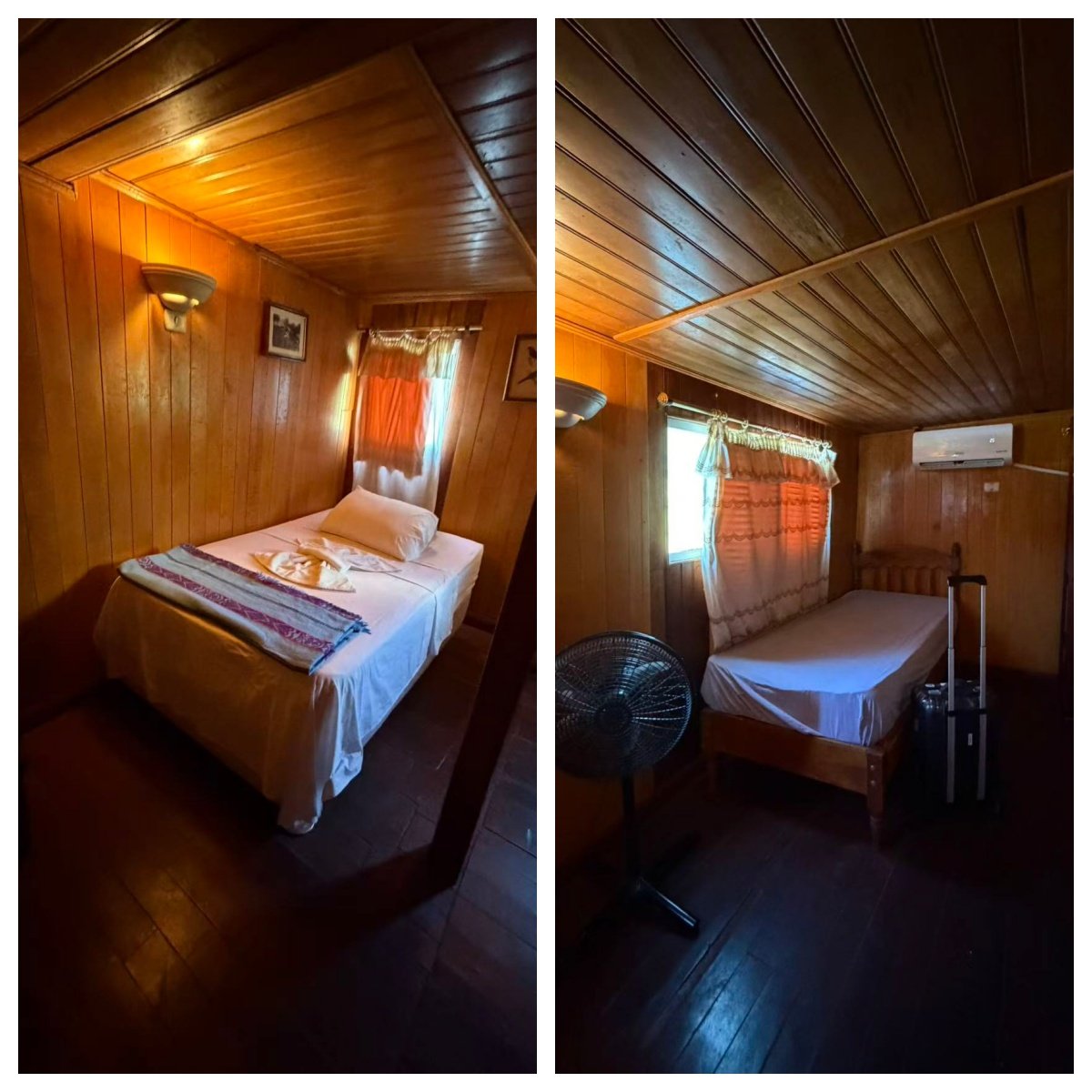
Leo’s cabin on the Rio Amazonas Research Station.
Many users on Xiaohongshu have shared their experiences finding lodges in Iquitos, with Ceiba Tops being the most frequently recommended.
This time, I happened to discover a completely different path—the Rio Amazonas liveaboard. It offers the same amenities like air conditioning, hot water, and Wi-Fi, making it far from a "rugged" experience.
You get to follow the onboard scientific research team’s activities, which ensures a high-quality, English-speaking environment. It also provides excellent exposure to local history and culture, offering a truly unique experience.
The original owner of this boat was the Morey family, one of the wealthy families who invested in the area during the rubber boom. They also owned what is now the Casa Morey Hotel in Iquitos.
Currently, the boat belongs to Professor Richard Bodmer’s research group from the University of Kent. He also runs a foundation locally called FundAmazonia, which accepts global donations for the protection and study of the local ecosystem.
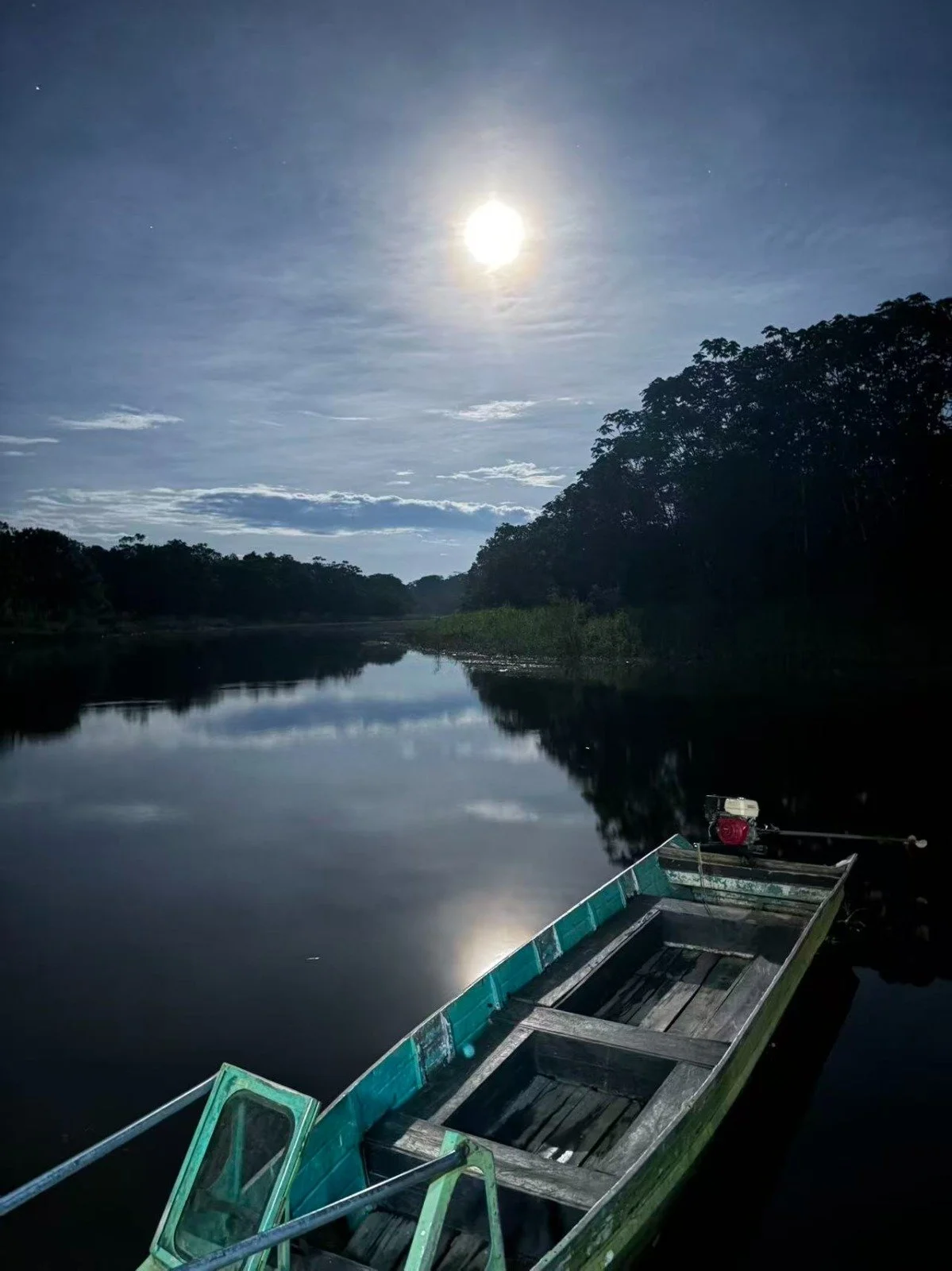
A motorboat used for biological research.
The boat hosts researchers, students, and volunteers from around the world (mostly North America & Europe), as well as curious tourists like myself. All of this contributes to their research funding.
I was very lucky; this time I was the only guest on board, accompanied by two scientists, a local guide, and two logistics support staff.
We stayed on the largest boat, with 3-4 other boats nearby designed for different environments to carry out various scientific missions.
Regarding the activities: they are actually quite similar to other lodges. We head out by boat to search for mammals like monkeys, sloths, and anteaters, as well as birds, caimans, and river dolphins.
The schedule includes three outings a day, which is actually quite intense.

Log of Amazonian wildlife seen.
What makes it different is that every outing involves using professional tally sheets to contribute data for recording and estimating population density.
The lead scientist, Paula, who leads the outings every day, is very nice and is an expert in ornithology.
The other scientist, Osnar, is an expert in camera traps. He sets up cameras locally to track mammal activity and has even captured footage of jaguars.
Overall, it was a very special experience. As a former "research grunt" who worked in a national laboratory, I always feel a special affinity for researchers. It felt great.